

September 2025 Newsletter
Nearly Two Decades of Innovation in Equine Veterinary Medicine
I’ve been at it officially since 2008, but I started fiddling with vet medicine in Uni, therefore I can say I’ve been practicing for about 20 years. TWENTY YEARS. That sounds crazy. We had a beef farm and salami factory back home so I was more or less involved since early days – however I didn’t want to be a horse vet then, my first choice of Uni were experimental physics and farm animal medicine as a second choice! What can you say, life is a box of chocolates. I’ve always been interested in computers and techno-stuff, particularly videogames, most definitely videogames, so trying to play with scanners and x-ray machines has always fascinated me and felt natural.
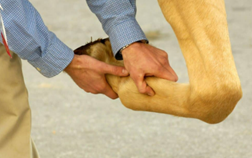
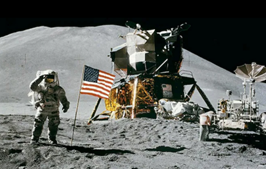
In the ever-evolving realm of equine veterinary medicine, the past twenty years have led us to profound changes. What was once a profession rooted in physical processes, tactile diagnostics, and rudimentary imaging has been redefined by fast technological advancements. From digital radiography that now travels with us to the field, to portable ECG devices, to laptop sized ultrasound scanners, to the quiet but inevitable utilisation of AI in practice management software, the modern equine clinic should be a symphony of precision, efficiency, and foresight. This newsletter explores the improvements that have carried us forward in the last couple decades and the innovations that await just around the corner. Think it this way – all of us, no exceptions, have got our phones in hand 24/7. iPhone can do a lot – calls, emails, messages, images, photos, games, apps. They are an irreplaceable communication tool, when signal works, and are a portal to knowledge if used correctly – I google things all day long! It’s mad to think that current mobile phones possess significantly more processing power and memory than the Apollo 11 guidance computer. The spaceship that took us to the moon in 1969!
It would be silly not to harness such advanced technology into vet magic, wouldn’t it?
The veterinary kit is luckily getting smaller and smaller, more ergonomic and more portable every year. My car nowadays looks more like a car rather than Father Christmas sledge and that’s thanks to the improvements to computers, plates, generators, probes, scopes and so on.
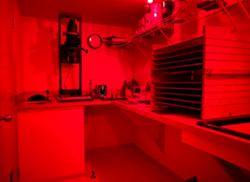
Over the past 20 years, radiography has transitioned from film and darkrooms to dynamic, mobile, high-resolution diagnostics that allow vets to see more, know sooner, and treat with greater precision. I have mentioned in a past newsletter that my “first” equine job was to process x-ray films in a dark room. That occurred in preparation to 2006 Keeneland yearling sales when we were x-raying about 50 yearlings a day, 40 shots each, so each day I would be out and about acquiring films in the morning with Spirito, Howard Kenny (now a small animal vet in Clonakilty), Tom O’Brien (now a big time surgeon in Kildare) and Michael Hore (still working in Lexington!), to be followed by a solid 6h in pitch black darkness with a faint red light processing about 2,000 x-rays a day! Mad numbers if you think about it.
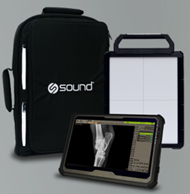
Gone are those days of lengthy processing. Digital radiography (DR) systems have become the standard, delivering crisp, high-resolution images in real time. Today’s battery-powered, wireless DR units are not only more efficient but also more portable, allowing vets to capture images anywhere (as long as the battery has some charge left). The speed and clarity of these systems have massively improved diagnostics and quality of care, especially in lameness and pre-purchase evaluations.
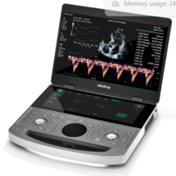
Ultrasound technology has advanced remarkably, with the introduction of high-frequency probes and more compact devices. This progress has led to enhanced imaging of soft tissue structures such as tendons and ligaments, absolutely vital for what we do, and improved reproductive diagnostics. Furthermore, 3D ultrasound applications are gaining traction. The scanner is by far the piece of kit I use the most, the one that comes with me wherever I go. My first scanner looked more like a microwave than a little laptop! Good machines are expensive, but they are worth their weight in gold. As a general approach, I strongly recommend our vets to image any area of concern with the scanner as this often picks up subtle lesions and speeds up the whole diagnostic process.
Magnetic Resonance Imaging (MRI) and Computed Tomography (CT) are no longer confined to university settings. Today, equine-specific MRI machines, including standing MRI systems, are increasingly accessible, reducing the risks associated with general anesthesia. These are the gold standard of advanced imaging and are often used for challenging distal limb troubles whose identification is beyond radiography and ultrasonography’s reach. In all fairness there isn’t much a good sonographer with a good scanner cannot diagnose but, to make an example, visualisation of deep structures in the foot is much completer and more precise through magnetic resonance compared to US and DXR. CT scanners have entered clinical practice, enabling rapid, detailed imaging of complex anatomical regions such as the head, neck, and distal limbs. These are still prohibitively expensive (same as MRI machines) and currently available in only a couple UK equine hospitals (such as NEH) but in time will become more and more accessible and widespread, so I will probably have to pull the credit card out and have one at some point. I’ll keep looking on eBay for a second hand one.
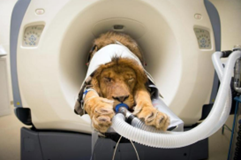

Infrared thermography is finding its place in pre-injury diagnostics, particularly in high-performance equine athletes. It is not a standalone diagnostic tool and can be inaccurate but in the hands of a good, experienced vet can definitely be a handy gadget to have.
Not all that glitters is gold – there are some diagnostic and therapeutic tools that are literally the flavor of the month, only to disappear over time. Market is key and it chews and spits out what it doesn’t like. Want an example? We are all STILL using Bute, whilst techniques such as stem cells or so are now seldom performed. I’d like to think I’m quite level headed and evidence based so you won’t hear us recommending some treatments or diagnostics that are not data and fact proven.
Surgical innovation in equine medicine has galloped forward over the past two decades, driven by better materials, minimally invasive approaches, refined techniques and improved post-operative care. Arthroscopic surgery is now a mainstay for joint care and laparoscopies are now widely performed to treat and diagnose a wide array of abdominal conditions. Advances in suture materials, bioabsorbable implants, and 3D-printed orthopedic devices have improved outcomes dramatically. We’ve also seen the refinement of standing surgeries, aided by advanced sedation protocols, reducing the need for full anesthesia.
Scopes in general are more portable, smaller, lighter, sometimes robust enough and a must have for any racing vet. Guesswork is no more as each endoscopy is now video recorded. My first gastroscope was the size of a washing machine, no jokes, it was an absolute pain to load and off load from the car, let alone setting up in a stable – modern models are now the size of a bedside table, but that’s an improvement nonetheless!
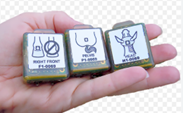
There are phone apps that allow us to examine a horse’s gait and lameness objectively just by filming a short trot up video, and make a more mathematical assessment. I was part of a small team of vets that helped trialing the old “Lameness Locator” back in 2008-09, which was one of the first lameness detecting devices. Back then it consisted of a large rugged tablet connecting to 3 sensors, which had to be glued or taped to the horse’s hoof, head and pelvis. I still remember the blocking I received for forgetting such sensors on charge overnight and completely blowing them up as they didn’t have an auto cut-off system! These apps are not that helpful in my hands, I’ve trained my eyes and hands to lameness since I graduated so I can say I’m pretty well road tested by now, but perhaps I’m becoming too old school,
Practice management software’s (PMS) used by veterinary businesses, responsible for data storage and filing, have improved massively during the last 20 years. Equine veterinary practices, once reliant on paper charts and basic scheduling tools, are now benefitting from improved clinic administration, client engagement, record-keeping, and mobile veterinary service delivery. To us getting an advanced practice management software was a must as no one can read or even remotely interpret my writing so in order to avoid vet practice domestics we went digital from day one.
Early PMS systems offered modest gains in record centralization but were often hindered by on-site servers and clunky interfaces. Modern systems offer seamless access to records from any device and secure data storage, whilst coordinating vets and offices. We all carry out iPad for this reason – we can do our notes on the go when taking a break from playing Candy Crush.

Artificial intelligence is now a set of words we all are familiar with or at least have heard of. We stand on the threshold of a moment in time in which artificial intelligence (AI) promises not to replace the equine vet, but to amplify their diagnostic insight, streamline workflows, and unlock predictive skills. Machine learning algorithms are already being trained to interpret radiographs, detecting minute signs of trouble that the human eye may overlook, especially when tired after many hours of scoping and blocking horses. From early fracture lines to subtle bone lesions, AI-enhanced diagnostics will augment clinical decision-making with remarkable precision. There are already many software’s available that do this in human and small animal medicine. I remember reading an article that highlighted the fact that an AI software was able to pick up development of a small cancer THREE YEARS before the naked eye when reviewing a standard mammogram. That is incredible and will save a lot of lives, so embracing such technology is a no brainer.
AI’s potential extends beyond diagnostics. By analyzing patient histories, gait analyses and all vital parameters and inputs, AI can identify patterns and anticipate disease before it manifests. We are no doubt far away from such a scenario but things nowadays happen a lot quicker than we think!
AI is also improving the administrative side of veterinary practice, which is great as no one likes mounds of paperwork to go through. Apps that allow dictation-to-text features, intelligent scheduling, automated billing, and smart reminders are fantastic – when optimised they will enable veterinarians to devote more time to clinical care or to catch up on some sleep! I’ve got to say I’m not sure this will ever work for me as dictation software’s really struggle with my accent therefore every time, I try to dictate a report (or even a message) it ends up being a long paragraph of gibberish nonsense which I have to then type up manually anyway whilst swearing into the microphone.
I’d like to raise a further point: if you have ever been in the infinite telephone loop when you had a customer service problem and couldn’t stop pressing 1 through 9 to get to a human being, then you understand the value of human interaction! I am well aware of how much we all hate dealing with automated answering machines. That’s clearly not on the cards for us! We are never going to lose that personal touch and you will always be able to speak with one of us vets or admins. Anyway, why argue with an automated, virtual receptionist when you can argue with a real person!
I think finding the right balance between automation and manpower is key – it is great to dictate notes and have them done in a blink of an eye but at the same time the personal human touch is vital particularly when dealing with high stress situations.
Twenty years ago, it would have been difficult to envision a world in which a vet could diagnose a complex orthopedic condition from a tablet in the field, manage their practice from a phone, or consult with a computer before beginning a treatment plan. And yet, here we stand. 100 years ago, everyone owned a horse and only the rich had cars! Times change! The horizon continues to expand, and with it, tools and possibilities that elevate our care for the horse. The path ahead is not merely computer based, it is intelligent, intuitive, and deeply interconnected. With that in mind, we all have to think forward and proactively if we want to be leaders in a more and more competitive world.
I hope you enjoyed reading this newsletter,
Paolo