
August 2026
Equine Eye Emergencies
Equine ulcers and swollen eyelids are the most common eye problems that we see, however any disruptions to the eye should be treated with a level of urgency and ideally checked over the same day. The good news is that early assessment can determine the likelihood of a positive outcome..
What to look out for?
Most simply – a horse holding its eye shut is often indicative of a painful eye. Other clinical signs include:
- Holding the eye partially or completely closed
- Excessive tearing
- Redness around or within the eye
- Swelling of the eyelids
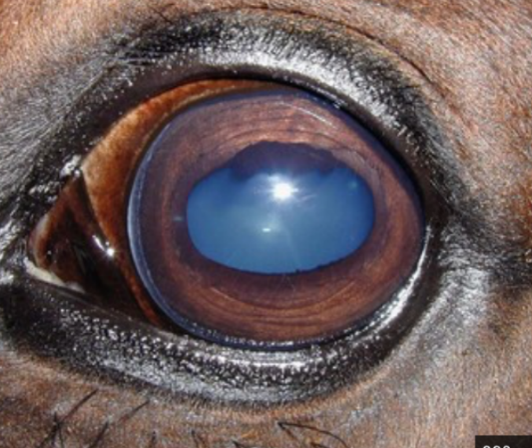
- Cloudiness, a blue/white appearance or a visible mark on the cornea
- Discharge from the eye
- Increased sensitivity to light
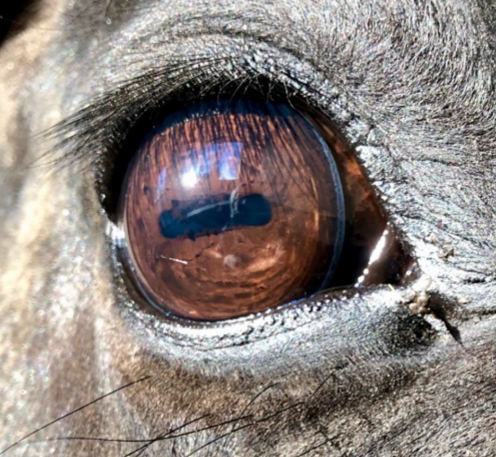
- A different-sized pupil – see the constricted pupil in the top image compared to the bottom
- A change in the appearance or position of the eye
- Rubbing the face or eye
- An obvious injury, cut or foreign object around the eye
A summary of common treatment options
- The treatment of eye problems in horses usually involves administering eye drops or eye ointment into the eye at regular intervals. Some ointments may be an antibiotic, pain relief, steroid or otherwise.
- Systemic pain relief (NSAIDs) will almost always be indicated for a painful eye
- Plasma = A blood may be taken from your horse and once this has separated in the blood tube, the plasma can be used to supports the healing process and inhibit destructive enzymes that may may further damage the cornea
- In some cases, your horse may not like the eye drops being put in the eye, especially if the eye is still painful before the treatment has begun to work. In such cases, there are other options such as sub-conjunctival treatment deposits, or more commonly a sub-palpebral lavage system (eye catheter). This allows the deposit of the treatment fluid onto the globe from a very small pipe through the eyelid.
Common Eye Emergencies
1. Corneal Ulcers
A corneal ulcer is an injury to the surface of the eye
What causes them?
- Primary trauma to the cornea – Often caused by scratching the eye on an object or foreign body trauma .
- Secondary to other conditions – these can be due to problems such as ingrown eyelashes or anything affecting normal eyelid function
What are the clinical signs?
· A “painful eye” is usually the primary complaint. This is characterised by 2 distinguishing findings.
· 1) Tight closure of the eyelids.
· 2) Watering or weeping of the eye.
In advanced or severe cases, it may be possible to see an obvious defect on the corneal surface associated with a “cloudy eye”.
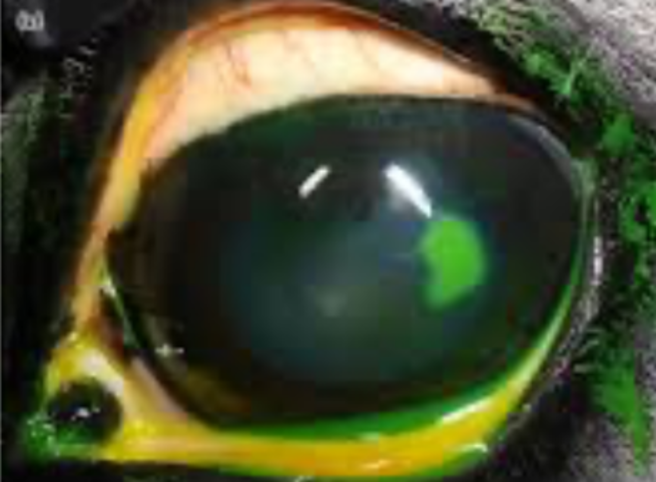
Corneal ulcers are diagnosed using a fluorescein stain, as seen in the image. Any uptake of the green stain indicates a defect in the cornea. This also determines severity and subsequently, treatment.
Treatment
Simply, superficial ulcers tend to heal very well with a few days of treatment, however, deeper ulcers are prone to infection and can require a longer duration of treatment if secondary complications occur. The mainstay of treatment options for an ulcer include topical antibiotic ointment into the eye and a course of anti-inflammatories. For particularly painful ulcers, atropine drops can be added to reduce any spasms of the eye. If this first line of treatment is unsuccessful, further options include different antibiotics, anti fungal and anti-collagenase medications and finally, surgery as a last resort.
2. Eyelid Injuries
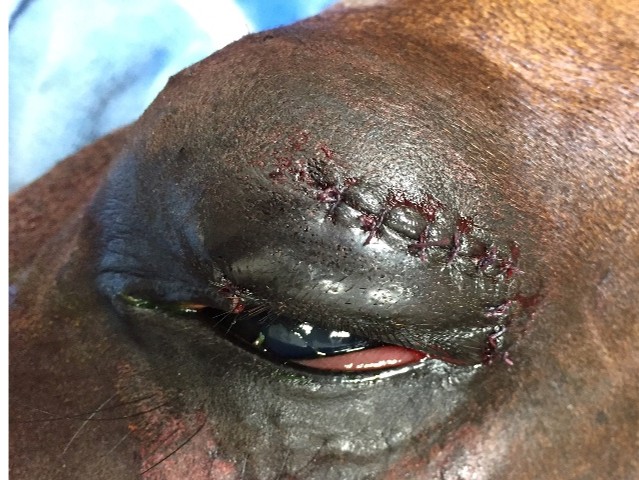
Eyelid lacerations can occur when a horse catches its eyelid on a nail, hook, bucket or other object. Even an apparently small eyelid injury shouldn’t be underestimated due to the importance of the eyelid for protection and lubrication of the eye, and this may require stitching to preserve the eyelid function.
3. Uveitis
Uveitis is inflammation inside the eye which often results in a painful eye with a constricted pupil. Due to the constricted pupil, these horses will often be sensitive to light, therefore, the eye often appears tightly shut. Prompt treatment is important because uncontrolled inflammation can result in complications including cataracts, adhesions within the eye, retinal problems and glaucoma. Sadly, uveitis is the leading cause of both blindness and eye pain in horses. If a horse has two or more episodes of uveitis, this is termed Equine Recurrent Uveitis, an auto-immune condition.
Treatment
- Anti-inflammatories
- Atropine = The aim of this treatment is to cause dilation of the pupil
- UV masks are recommended to reduce exposure to UV light and reduce the changes of recurrence
Take home messages
Don’t underestimate ocular emergencies, as these are often time sensitive and best to be safe. In the meantime, please do not put steroid-containing eye medication into a painful eye until the presence of an ulcer has been determined, as they can make corneal ulcers much worse. If in doubt, give us a ring!
Best wishes,
Molly